
By Chip Rotolo, Pew Research Center
Most say they engage in these practices for fun, rather than for insights or guidance on life decisions
Over the past decade, media reports have described rising popular interest in New Age practices such as astrology, tarot card reading and fortune-telling. These practices are frequently associated with young people, and they have developed their own social media cultures on TikTok and other platforms, especially during the period of social distancing brought on by the COVID-19 pandemic. So, how popular are these practices, and why do Americans engage in them?
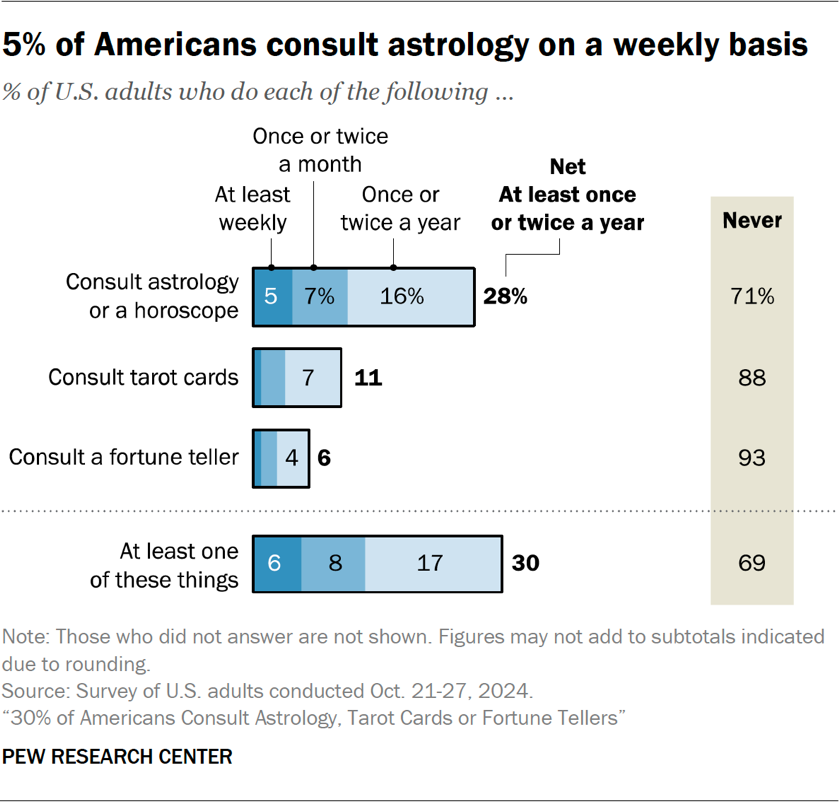
A fall 2024 Pew Research Center survey finds that 30% of U.S. adults say they consult astrology (or a horoscope), tarot cards or a fortune teller at least once a year, but most do so just for fun, and few Americans say they make major decisions based on what they learn along the way.
Here are other key takeaways from the nationally representative survey of 9,593 U.S. adults.
Despite recent attention to astrology, the number of Americans who believe in astrology doesn’t appear to have changed very much in recent years. On the new survey, 27% of U.S. adults say they “believe in astrology (the position of the stars and planets can affect people’s lives).” That is not significantly different from what we found when we asked an identical question in 2017 (29%). And, although the results of earlier surveys may not be directly comparable because of differences in methodology, Gallup polls from 1990 to 2005 consistently found that between 23% and 28% of Americans believed in astrology.1
On most questions we asked about these practices, there are big differences by age and gender. Younger adults – and especially younger women – are more likely to believe in astrology and to consult astrology or horoscopes. For example, 43% of women ages 18 to 49 say they believe in astrology. That compares with 27% of women ages 50 and older, 20% of men ages 18 to 49, and 16% of men who are 50 and older.