
by Tim Wyatt, The Living Church
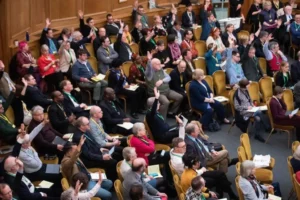
After years of grueling arguments about same-sex marriage, the Church of England’s Living in Love and Faith project mostly ran into the sand thanks to synodical arithmetic.
The House of Bishops initially hoped to push progressive reforms through on a simple majority basis on the floor of the General Synod, the C of E’s elected governing assembly. However, having belatedly taken advice from the church’s lawyers and theological advisers, the hierarchy last year acknowledged that making further progress on the issue would require a more complex and lengthy procedure under canon law.
The new hurdle the liberals had to reach was a two-thirds supermajority in each of the synod’s three houses: bishops, clergy, and laity. While there were narrow progressive majorities in all three, it was clear to all sides that the conservative wing had more than enough numbers on the synod to block any fresh legislative action.
Attention rapidly shifted to elections that took place last month, when the five-year term of the synod was up and each of England’s 42 dioceses elected a new slate of priests and lay representatives (the bishops sit primarily ex officio). All licensed clergy could vote for their diocese’s representatives to the House of Clergy, and the House of Laity members were elected by lay members of deanery synods.
The results are now in and point to another five years of stasis and gridlock.
Synod Elections by the Numbers
Tabulating which faction might have won or lost in synodical elections is not a simple task. Candidates historically have run as independents rather than trumpeting their affiliation to church organizations or parties. According to analysis by the C of E, more than half of the winning candidates in last month’s elections are new to the synod and thus have taken no part in the debates over same-sex blessings that have divided the chamber (and the wider church).
But each candidate does submit a two-page “election address” in advance. Perusing these 386 statements provides a rich, if necessarily incomplete, sense of where the new synod members are coming from and what direction they might seek to steer England’s national church.
The main flashpoint remains, as ever, sexuality, and this time around candidates were unusually open. Two leading progressive groups, Inclusive Church and Together for the Church of England, even produced a list of approved candidates in advance for their supporters. Liberal Anglicans were also encouraged to use a formulaic sentence in their election addresses to signal to the electorate where they stood: “I am committed to equality for everyone, at all levels and roles within the church, regardless of disability, economic power, ethnicity, sex, gender identity, learning disability, mental health, neurodiversity or sexuality.” On the other side were dozens of conservative candidates who made their commitment to traditional marriage doctrine explicit in their statements.