
By Mark Tooley, Juicy Ecumenism.
Jesse Jackson’s death represents perhaps the end of two eras. He was an icon of the Religious Left and of the historic black church, both of which have receded from public life, the former almost into oblivion. Jackson was the last great figure of that type.
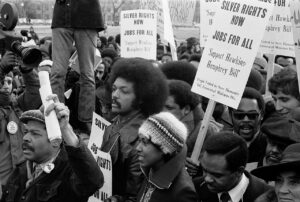
Jackson was one of the last close associates of Martin Luther King, Jr, having been present at the 1968 assassination. In the 1970s he became a star in his own right, founding Operation Push. A masterful organizer and speaker, he was renowned for his motivational speeches for self-empowerment. He invited young black audiences to chant with him “I am somebody.”
Always ambitious, Jackson was always convinced he was somebody, despite his original poverty and illegitimate birth. He excelled in school and athletics, and a letter of introduction got him a meeting with legendary Chicago Mayor Richard Daley, who offered him a job as toll booth collector. Jackson, with bigger dreams, politely declined. He attended seminary and was ordained a Baptist, although he never pastored a church.
Jackson’s 1970s celebrity elevated him to political influence. He founded the Rainbow PUSH Coalition, shifted left socially, from pro-life to pro-choice, and he ran for the Democratic presidential nomination in 1984 and 1988. His lock on the black vote in Democratic primaries garnered more votes than most expected and enhanced his power. Jackson’s speeches at Democratic conventions were unforgettable barnburners, with only New York Governor Mario Cuomo as oratorical competitor.
In the 1980s, with his new prestige, Jackson focused on foreign affairs. In 1984 he successfully negotiated with Syrian dictator Hafez al-Assad for the release of a downed U.S. airman. President Reagan greeted them both in a White House ceremony. Jackson capitalized on his diplomatic prowess to gain similar hostage releases from dictators in Cuba, Serbia, and Iraq.