

from Seen in Journalism
London Trans Pride was widely covered as a colourful, celebratory march. BBC News described the event as “joyous” and “cathartic”, quoting participants who spoke about community, visibility and solidarity.
No report can include everything. But editorial choices matter.
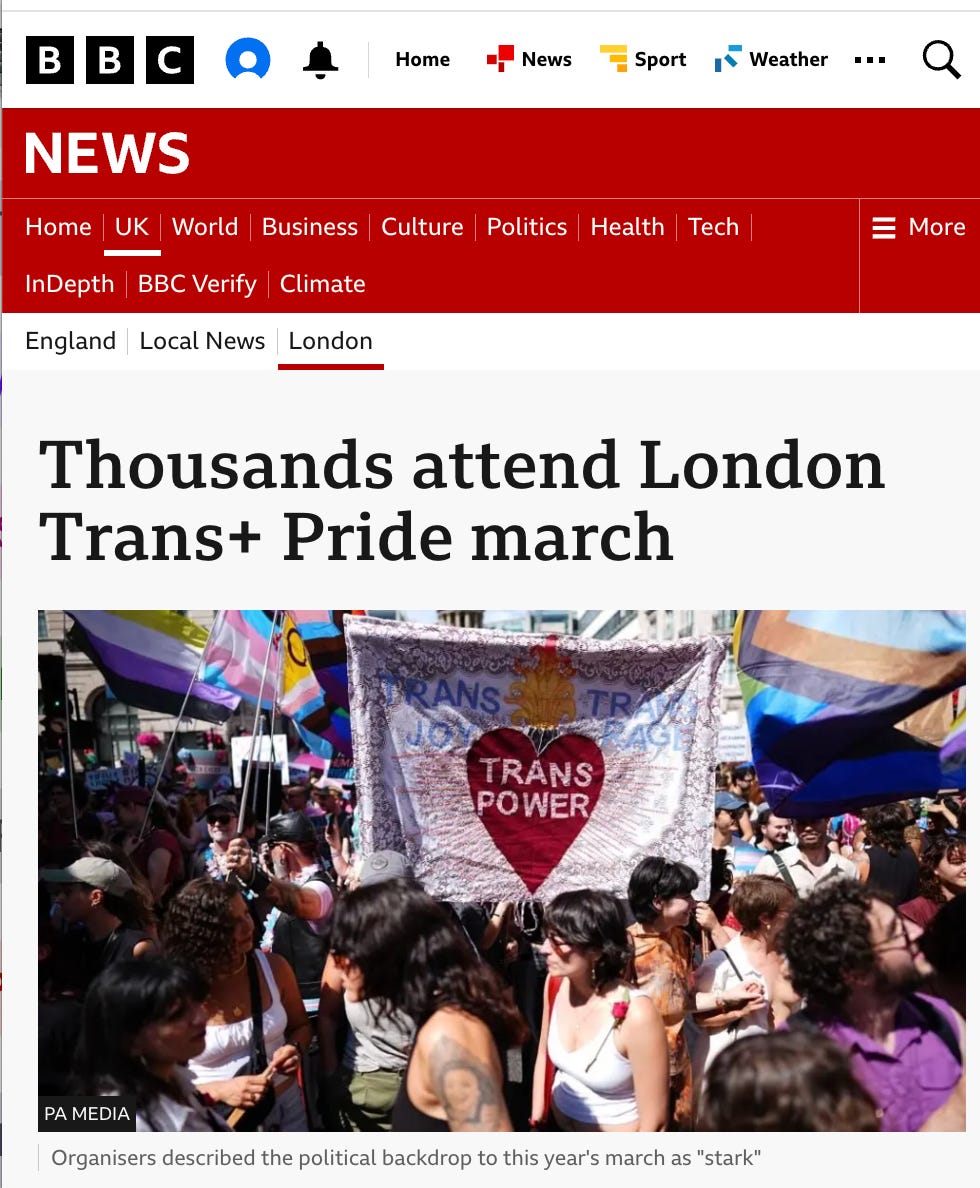
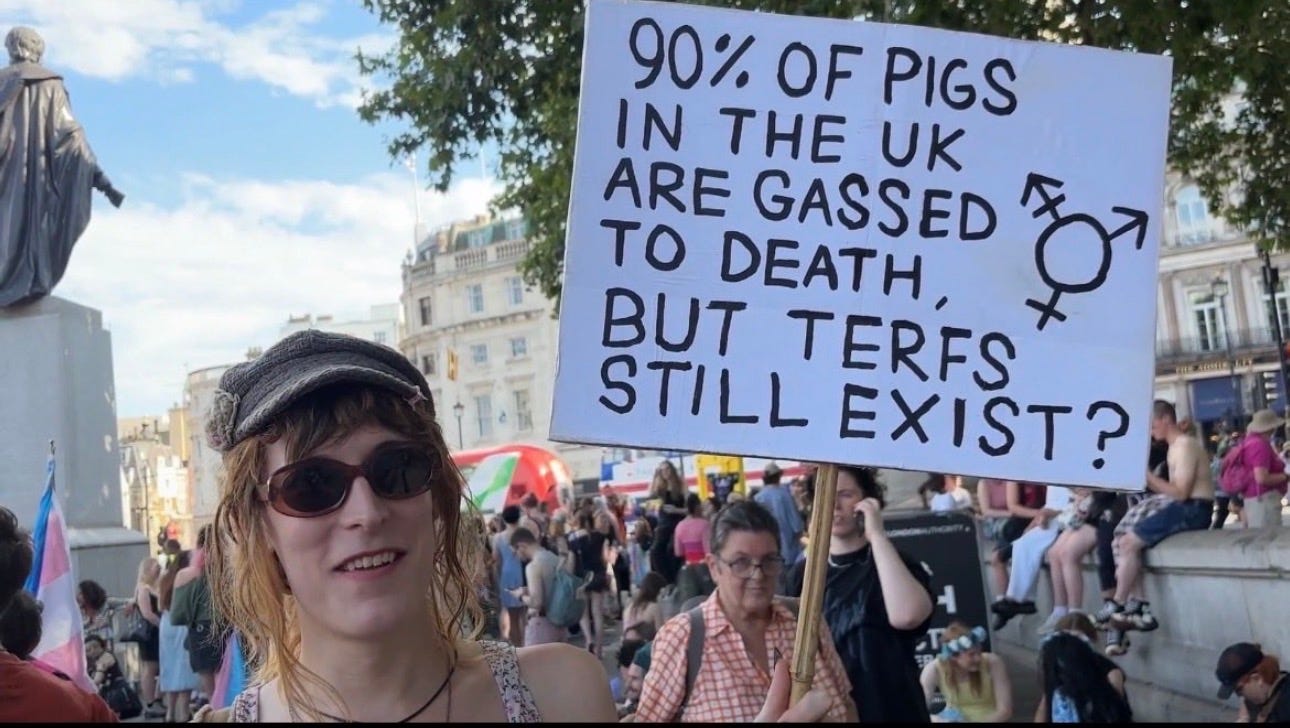
While BBC cameras focused almost exclusively on smiling faces, colourful banners and family-friendly imagery, other scenes from the same event were circulating widely on social media. These included masked protesters, placards calling for TERFs to be “gassed”, people displaying mastectomy scars and highly controversial speeches that received little or no attention in mainstream coverage.
The issue is not that journalists should have ignored the positive atmosphere experienced by many attendees. It is whether audiences were given a sufficiently rounded picture of an explicitly political protest.
The BBC also only quoted supporters of the event, describing it as “joyous”, “cathartic” and “amazing”. But no perspective was included from those concerned about the implications of gender identity policies for women’s single-sex spaces – one of the central issues driving the wider public debate.
Journalism inevitably involves selection. But when those selections consistently favour one side of a contested issue, they do more than tell a story. They shape how audiences understand it.
Read here (scroll down)

from Andy Ngo: Trans activist Sarah Jane Baker, who served years in prison for attempted m—rder and kidnapping and torture, was one of the speakers at the London Trans Pride today in Trafalgar Square.