
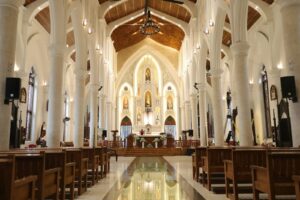
By Anthoniraj Thumma, Anglican Ink. (Photo: Unsplash)
Christianity in the Indian Subcontinent, with its presence of nearly 2000 years, is almost as ancient as Christianity itself, as it was spread here around 50 CE by Saint Thomas, one of the twelve apostles commissioned by its originator Lord Jesus Christ himself. Among the Christian Churches in India, the Catholic Church is the single largest forming about 1.57% of the total Indian population with over 23 million Catholics.1 Despite its tiny percentage in the multi-religious India, the Catholics in India make up the second-largest Christian population in Asia after the Philippines, and one of the largest population of Catholics in the world. As a part of the worldwide Catholic Church, the Catholic Church in India is under the spiritual leadership of the Pope at the Vatican. Eighty years ago, the Catholic Bishops in India came together and formed a national association called “The Catholic Bishops’ Conference of India (CBCI)”. Significant phases of development of the CBCI are briefly outlined in this article with their historical settings and geo-political context.
Early Beginnings
The Catholic Bishops’ Conference of India (CBCI), one of the oldest and largest Episcopal Conferences / Assemblies in the world. It began much before many such Conferences and passed through many phases of development. Pope Leo XIII established the Episcopal Hierarchy in India on September 01, 1886 by his Apostolic Letter Humanae Salutis raising the ten of the existing Vicariates Apostolic to the status of Dioceses, and six others to the position of Archdioceses.