
by Julian Mann
Should the churches of South Sudan be appealing to the Archbishop of Canterbury, Sarah Mullally, for support in view of the Church of England’s backing for same-sex blessings?
The Anglican Communion News Service reported on October 23:
“The Most Revd and Rt Hon Dame Sarah Mullally, the Archbishop of Canterbury, has hosted a private meeting of ecumenical leaders, faith-based NGOs and government officials at Lambeth Palace, to discuss the ongoing conflict in South Sudan, as the country prepares for its first elections.
“The meeting, jointly convened by the Church of England and Christian Aid, was attended by representatives from the South Sudan Council of Churches (SSCC), who outlined the grave political and humanitarian situation in the country and the role churches are playing in peacekeeping, before presenting attendees with a letter and statement, calling for international support.”
In the letter, the Revd Tut Kony Nyang Kon, General Secretary of the SSCC, wrote: “We long for an end to violence, killings and insecurity that have plagued our society for too long. We are working tirelessly to mobilise communities for peace and to build bridges between different groups. We pray for and encourage political actors to prioritise dialogue over confrontation at this juncture of our fragile political transition and ask for your support in this.”
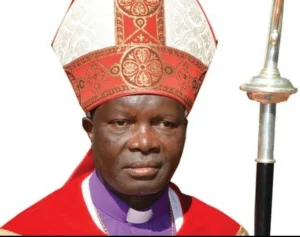
The chairman of the SSCC is the Archbishop of The Episcopal Church of South Sudan, Justin Badi Arama. He is also chairman of the Global South Fellowship of Anglican Churches (GSFA).
In October 2025 when Sarah Mullally, then Bishop of London, was appointed Archbishop of Canterbury, Archbishop Badi Arama issued a statement on behalf of the GSFA.
He said: “While we shall of course pray for Bishop Mullally as she assumes this historic position, we feel compelled to say that we feel this appointment is a missed opportunity to reunite and reform the Anglican Communion.”
He reported that the GSFA was “deeply saddened that the person still perceived by many to be the spiritual leader of now some 100 million Anglicans worldwide has played a leading role in the Church of England’s departure from Anglican tradition and the clear teaching of Scripture in matters of marriage and sexuality”.
He continued: “When the Church of England’s General Synod opened the door to the blessing of same sex relationships at its February 2023 General Synod she described this as ‘A moment of hope’. For us, it was a moment of lament because we believe that the teaching of Jesus and the whole of Scripture is fundamental to human flourishing, both now and for eternity, and should not be compromised by the pressures of a particular culture.”
Now, ahead of South Sudan’s elections due in December, Archbishop Mullally, the Roman Catholic Archbishop of Westminster, Richard Moth, and the Moderator of the Church of Scotland, Gordon Kennedy, have written to the churches of the world’s newest nation, including its Anglican Church:
“We have heard your longing for peace and have seen your efforts to mobilise communities to build bridges. Your role in peacebuilding is known around the world. In the coming months, it can prevent even greater suffering affecting the people of South Sudan, at this critical and volatile time in the run up to elections. We commit to stand with you, in solidarity, in prayer and in the spirit of the Ecumenical Peace Pilgrimage.”
Since December 2023, the Church of England’s House of Bishops has allowed services of blessing for same-sex couples, called Prayers of Love and Faith, in existing church services.
South Sudan’s churches are clearly very vulnerable and it is understandable that they want support from church leaders in the West. But should they be relying on the support of an Anglican Church that has departed so flagrantly from biblical truth?
Julian Mann, a former Church of England vicar, is an evangelical journalist based in Lancashire, UK.