
by Madeleine Davies, Church Times
Candidates are campaigning on issues including same-sex relationships, parish funding, evangelism, and the future of the Church
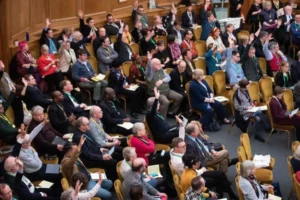
THE General Synod elections are now under way; so candidates’ statements are being analysed to determine their positions on issues likely to arise in the next quinquennium.
The Inclusive Synod Election Campaign is supporting 276 candidates — up from 221 in 2021, when 131 were elected. Inclusive Church (IC) is working in partnership with Together for the Church of England to support candidates willing to make a public commitment “to equality for everyone, at all levels and roles within the Church, regardless of disability, economic power, ethnicity, sex, gender identity, learning disability, mental health, neurodiversity, or sexuality”.
A full list of candidates is publicly available. The campaign’s advice to voters encourages them to read all election statements carefully, “and if they are not clear on issues like ordained women’s ministry or fully supporting same-sex relationships do not vote for them. Some candidates make nuanced and obfuscating statement on key issues, or don’t mention them at all — don’t be caught out!”
Last week, the Anglican Futures website published analysis of almost 1000 statements, calculating that 40 per cent of clergy candidates and 30 per cent of lay candidates quote the IC statement, or commend the blessing of same-sex relationships. “About 40 per cent of both clergy and lay candidates appear to hold more traditional views,” it said. “Many state clearly that they hold a traditional view of marriage to uphold the Church’s teaching in Canon B30.”
In 2021, the Church of England Evangelical Council (CEEC) advised candidates not to “focus on controversial matters such as same-sex relationships/marriage”.