
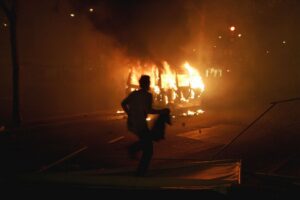
by Mike Starkey, Psephizo (Photo: Wikimedia Creative Commons)
It’s early afternoon on Friday 16 October 2026. I enter the public transport office in central Strasbourg, next to the Alt Winmärik tram stop. Alt Winmärik means Old Wine Market in the old Germanic Alsace dialect. From the 14th century onwards, this street was the place wine was bought and sold. A genial, middle-aged man asks me how he can help.
‘I’ve just paid one of your machines for a 10-trip book of electronic tickets to be added to my travel card,’ I say. ‘See, here’s my receipt. But when I tap my card on the red machine before getting on a tram, it says I only have two trips left.’
‘Ah yes’, he replies with a Gallic shrug. ‘The red machines can’t count above nine.’
I try an exaggerated look of French incredulity. ‘What?’
‘Well, double-digit numbers don’t show when you swipe your card on the red machines. Let’s check on my big machine here how many trips you have left. Look, you actually have 32 trips on your card.’
‘But that’s crazy and misleading’.
‘Yes’, he beams. ‘It is.’
A Night of Rioting
The following evening, Saturday 17 October, the same public transport office is destroyed in the riots erupting across French cities. Youths in black hoodies and balaclavas kick in the windows, smash furniture and daub the walls with graffiti. Colourful transport leaflets spill out onto the pavement.
The rest of that evening and long into the night, I can’t tear my eyes away from French media and social media. Limoges’ historic Town Hall burning. Lyon’s ornate tourist information office in flames, with local police saying ‘hostile individuals’ are preventing firefighters from tackling the blaze. Stores in central Lyon looted. Marseille looking like a war zone. Restaurants and cars on fire near Paris’s Place de la République. The stunning Galéries Lafayette department store smashed up.
As Sunday 18 October dawns, further images and footage emerge. Lyon shopkeepers and restaurateurs weeping as they survey the ruins of businesses they put their lives into. A young Parisian woman tearfully begging looters to stop. Footage of an elderly man telling a gang of youths they have no right to destroy property, while they jeer and call him a racist. More than 600 police and firefighters injured.
I sit on a tram heading across Strasbourg, to lead the morning service at the city’s multi-ethnic Anglican Church—27 nationalities, meeting in a beautifully austere Dominican church near the University and Botanic Gardens. They’re currently without a full-time priest, and I’m the locum minister for October.
Strasbourg is my current crush in a lifelong love-affair with France. My university degree was in French. I’ve worked in a high school and radio station in Orléans, the Paris offices of Peugeot-Citroën, and churches in Grenoble, Versailles and Paris. This morning I sit on the Strasbourg tram feeling numb, uncertain how I feel about that love affair now. My tram goes past the destroyed remains of the transport office, where wooden hoardings cover the smashed windows. It passes shattered tram and bus shelters. The apocalyptic scenes from the night before, and the tears of its victims, replay in my mind.