
from Pimlico Journal
The development of the anti-racist state
Following a number of high-profile arrests for speech-related crimes, Britain is seen as far as the White House as a realm of tinpot, two-tier woke tyranny, where authors of errant tweets can expect to spend more time in prison than sex pests and paedophiles and which commentators and comedians should avoid — lest they be whisked straight from arrivals to a holding cell having offended left-wing orthodoxies.
Lucy Connolly, a mother and childminder who received a 31-month prison sentence for ‘inciting racial hatred’ over a single (quickly deleted) tweet posted in the wake of the Southport Murders, is just one of many Brits that the state has pursued for such crimes in recent years. British police presently make 30 arrests per day for online speech offences, with many of these treated far more seriously than violent, sexual, or acquisitive crimes. Connolly’s was one of 44 convictions for ‘stirring up racial hatred’ last year, a record high induced by Lord Hermer, who advised during the summer 2024 unrest that the sixty-year-old offence could be used to go after online speech. As Attorney General, Hermer is required to sign off on each individual charge for these offences.
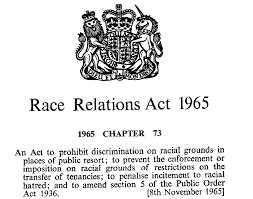
Today, many understand the Connolly case as part of Labour’s draconian crackdown on that unrest, and therefore as a specific issue with ‘two-tier Keir’ and his government’s persecution of its political opponents. In reality, the problem goes deeper than those people suggest. Indeed, apologists for Connolly’s conviction are correct to point our that her punishment was well within current sentencing guidelines, and thereby to imply that her imprisonment represents the normal functioning of modern British justice. The British state has been set up in this way for decades, with draconian speech laws restricting the ability of the native majority to express dissent having been its favoured method of managing a multicultural society since the sixties.
As a previous Pimlico Journal contributor has noted:
Here, large scale multiculturalism undemocratically arose in the latter decades of the twentieth century, without popular consent being given, or even sought, and thus was doomed from the start. Unlike in Singapore, British multiculturalism carries the stench of imposition; a top-down experiment whose costs are borne unevenly, and whose benefits are loudly asserted, but rarely felt.
This well summarises the inherently unstable nature of our political settlement on immigration, and why it has necessitated such stringent constraints on our liberties. However, to understand the speech restrictions under which we now suffer and the unequal justice that flows from them, one must understand their intellectual roots as well as their legal basis.