
by John MacLeod, The Critic
Scotland’s religious traditions have been swept away. Now, secular intolerance rules
[…] In our great cities, its places of worship were on every street corner. In rural and smalltown Scotland, the Kirk was at the centre of local life; its clergy had the run of every nondenominational school and, in 1956 and in the wake of a notable revivalist tour by Billy Graham, Church of Scotland membership peaked at 1.32 million.
In other words, about 40 per cent of Scotland’s entire adult population was a signed-up Kirk communicant. Yet, within twenty years, the Church of Scotland shed two-fifths of her membership. In the new century, fighting for relevance or even an audience, the Kirk has slid through obscurity to the brink of oblivion.
Its financial deficit is now £6.5 million. It is poised to close a third of its churches and sell off more than 400 buildings. There is an acute shortage of ministers. Every new pastoral vacancy invites the automatic attentions of the Board of Parish Reappraisal — linking, merging and shuttering.
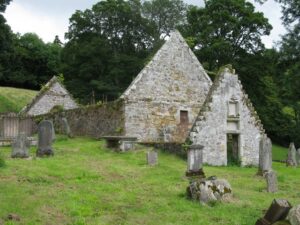
All over Scotland, we are increasingly familiar with the ex-Kirk. The concert-hall, the quirky theatre, the urban nightclub, the dinky apartments or country manor.
At every turn, it seems, Jesus has left the building. Even the Church of Scotland’s magazine has folded. Life and Work had been in print since 1879. In 2024 it had an operational loss of £250,000. Its print circulation, by Christmas that year, was just 5,612 — most of that for Sunday parish distribution and most, one suspects, ultimately binned.
In parallel, too, Scotland’s Roman Catholic hierarchy was once widely feared by our politicians and especially the Labour Party. In February 1974, the bishops’ emphatic denunciation almost certainly foiled the brilliant Jimmy Reid’s bid for election as Communist MP for Central Dunbartonshire. Yet, humiliated by the Cardinal O’Brien scandal in 2013, Mother Church now barely whispers in the background.
The collapse of religious observance in Scotland genuinely bewilders scholars. Callum Brown, of Glasgow University, has described it as “cataclysmic.” Hugh McLeod, professor of church history at Birmingham University, calls this era a “rupture in religious history as great as that brought about by the Reformation.”
“Scotland,” Iain Macwhirter reflected in an engaging book about our little land just before the 2014 referendum, “has had a history of militant Christianity from the Covenanters to the Disruption, and had an education system largely shaped by the Kirk. It is hard to believe that all this could disappear, in historical terms, overnight. And yet it did …”