
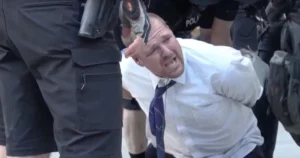
By Alex Littlefield, Juicy Ecumenism. (Photo credit: First Liberty)
Open-air preaching once formed a regular part of American public life. Evangelist Billy Graham and countless others before him stood in streets, parks, and open lots and called hearers to recognize their sin and turn to Christ for salvation. That message of human failure and divine rescue traveled ordinary thoroughfares without apology. The same activity now often draws charges of political motive or public offense. The First Amendment continues to protect peaceful proclamation of that message on public sidewalks whether the words strike listeners as religious, political, or unwelcome.
This past month, Richard Penkoski and David Grisham stood on the public sidewalks near Trinity Pride Fest along South Main Street in Fort Worth, Texas. Video recorded the afternoon of June 27, later posted on X, captures the exchange with a female officer.
“If someone is offended by your talking, then we have a problem,” the officer told the preachers. Asked whether a citation would follow for offensive speech, she answered, “Yes, absolutely,” adding that the charge would be disorderly conduct.
The video circulated widely after the account Libs of TikTok reposted the original on July 8. It should be noted that Penkoski and Grisham are hardly earnest street preachers: the two seek to incite, not to save misguided people from their sins. But First Amendment protections still apply to that speech, regardless of its sincerity and conviction.
On July 10, Assistant Attorney General Harmeet K. Dhillon of the Civil Rights Division described the footage as troubling and said the Division was examining the matter. By July 13 the Division sent a formal letter to the City of Fort Worth. The letter requested department policies on expressive activity in public forums, First Amendment training materials, and records of complaints dating to 2015 that alleged officers restricted protected speech. The city received thirty days to respond while the Division decided whether to open a formal investigation.