
Foundations for a Christian Anthropology
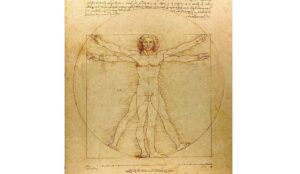
By N. Gray Sutanto, TGC. (Image: Public Domain via Wiki Commons)
No question today is more pertinent than this: What does it mean to be human? With declining belief in God and rising secularization come renewed debates concerning human nature. Culture now seems to hold to two contradictory beliefs: Either that we’re entirely material beings, meaningless clumps of matter in an endless void; or that we’re sovereign masters who determine our own meaning, with an internal sense of who we are that we dare not defy.
It’s no surprise that rejections of God lead to confusion concerning the image of God and the biblical teaching that we’re humbly related to this material cosmos and yet dignified as the crown of creation. With the advent of artificial intelligence and ongoing debates about race, gender, and sexuality, it’s all the more important to be clear about what we are and who we’re made to be.
Learning about a Christian theological anthropology is no mere academic exercise. It gets to the heart of who we are, explains our daily experience, and pushes us toward the love of neighbor and the common good.
In my book, For Us and for Our Salvation, I seek to address these issues by providing a biblical, theological, and practical introduction to the doctrines of humanity and sin. In this article, I present 12 theses that summarize a biblical and Reformed-catholic theological anthropology that I explain throughout the book. These 12 theses, I hope, can ground us as we stand in culture’s ever-changing landscape.
1. All human beings are made in the image of the triune God and are thus called to represent, enjoy, and glorify God forever.
God creates each individual according to his image. The first-person plural in Genesis 1:26 indicates that the whole triune God is the archetype for the human being, for each person of the Trinity shares a singular divine substance (see also Col. 1:15–17). Humans are created as representatives of God and are thus religious creatures made to have communion with their Origin. Therefore, each human being as such is created good, with dignity and agency.