
by Martin Davie
As Runcorn explains in his introduction:
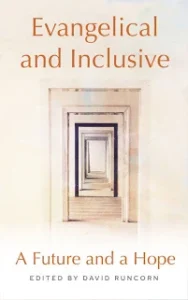
Evangelical and Inclusive is a new book of fifteen essays published by Canterbury Press and edited by David Runcorn which has been written by members of the Inclusive Evangelicals network, a network of Christians from various churches who self-identify as evangelicals and who are supportive of same-sex relationships and marriages and people with transgender identities.
‘The book explores the faith and convictions of inclusive evangelicals from a variety of angles and voices. There are chapters that set the evangelical story in its historical and global context, tracing how we have come to where we are today. We discuss approaches to Scripture and doctrine when the questions are new. We revisit the theology of the atonement and our understanding of salvation and mission. A pastoral study reflects on the understanding of guilt and shame and its impact on LGBTQ+ lives. The tough reality of conflict and division is explored. There are studies of ‘good fruit’-testimonies of growth and flourishing from inclusive churches. Interspersed in all of this, four people share the personal journeys of faith that have led them to inclusive convictions, and the cost and challenges this has involved.’
He goes on to say that the book is offered:
‘… in theological friendship to fellow evangelicals who, while disagreeing with us are open to continued conversation. They include many personal friends and colleagues.
We hope the book will be a resource to those in the wider church who wish to understand this rich, faithful but often perplexingly intransigent tradition better.
We hope all will catch an infectious vision of a renewed approach to evangelical faith, to the scriptures and to the place of this varied conflicted and creative tradition within the life of the wider church.’
In this review I shall look at each of the fifteen essays in the book in turn, explaining why I do not think any of them makes a persuasive case for adopting an inclusive evangelical position.
In what follows the term ‘conservative evangelical’ is used in contrast to ‘inclusive evangelical’ as a shorthand for those evangelicals who want to maintain or ‘conserve’ the traditional teaching of the Bible and the Church as whole regarding marriage and human sexuality. It is not limited to those who take a ‘complementarian’ view of the ministry of women.