
by Tim Wyatt, The Critical Friend
Decoding the new General Synod cohort
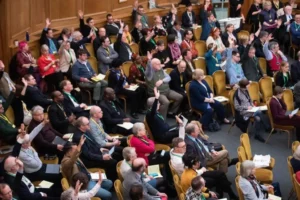
We’ve mentioned the Church of England’s General Synod elections a few times in the last few weeks. The results are in, as of last week, and we now know the names of the 386 women and men elected to sit in the Houses of Clergy and Laity for the next five years (members of the House of Bishops are mostly not elected).
However, unlike a normal political election, we can’t easily say who has ‘won’ the election. There are no parties in synod and technically everyone stands as an independent. So we can’t rattle off a simple number and say ‘the red team won this many seats and the blue team this many’. How do we know what shape the new synod will take, where it will stand on the crunch issues of the day?
Normally, we have to wait for the new synod to gather in person and see how the votes go. Often it takes several sessions and debates before the synodical arithmetic become clear. Or, someone particularly sad could work their way through the 386 electoral statements published by each of the candidates during the election to work out where they are coming from, and tot that up painstakingly by themselves. And, dear reader, I am that person.
Everyone who stands for synod is given two sides of A4 to make their pitch to their electorate, and I have read all 386 winning candidates’ election addresses: a total of 772 pages.
But before we go on to talk through what I found, this post is going to be for paying subscribers only. So, if you want to know if the conservatives or the liberals won the most seats, how many folk supported Save the Parish, and what issues are likely to dominate the next five years and shape the future of the C of E into the 2030s, you will have to join the hallowed ranks of paying subscribers for the absolute snip of £5 a month.
Of course, the first question everyone has on their lips is whether the pro-gay blessings liberals have got more seats than the anti-gay blessings conservatives. Before I share that headline figure, some caveats. There are a handful of people who are co-opted onto the synod or get a seat automatically because of their job. They don’t do election addresses, so I don’t know where they stand. They are a small group, just a dozen people or so, but if the two sides are very evenly balanced their votes could still be significant.
The other thing to say is that this isn’t an exact science. As I mentioned in my earlier piece on synod elections, there is a tendency for election addresses (those two sides of A4 each candidate writes) to be deliberately vague. Historically, candidates have been quite coy about where they stand, favouring generic statements which might appeal to all sides rather than nailing their colours to the mast.